

HSE Takes Part in BRICS Summit

On July 6–7, 2025, the 17th BRICS Summit took place in Rio de Janeiro. For the first time in the organisation’s history, representatives of civil society from BRICS countries participated. HSE Vice Rector, Head of the BRICS Expert Council–Russia, and Co-Chair of the Russian Chapter the BRICS Civil Forum Victoria Panova attended the meeting of the bloc’s national leaders.
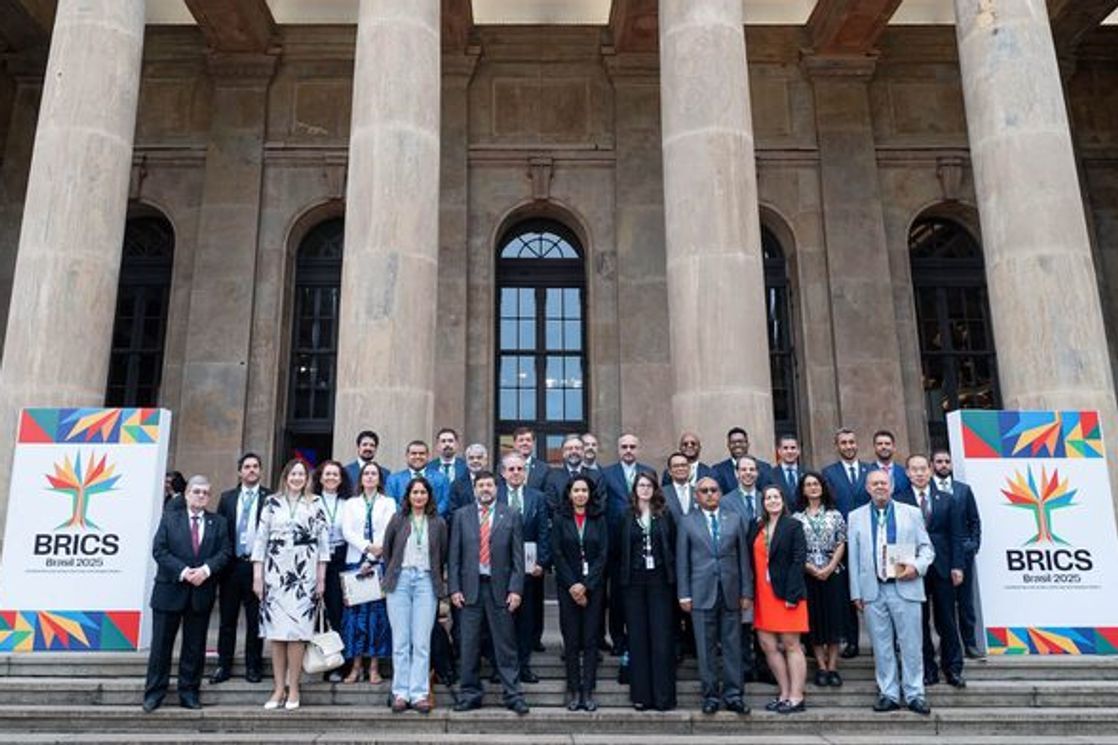

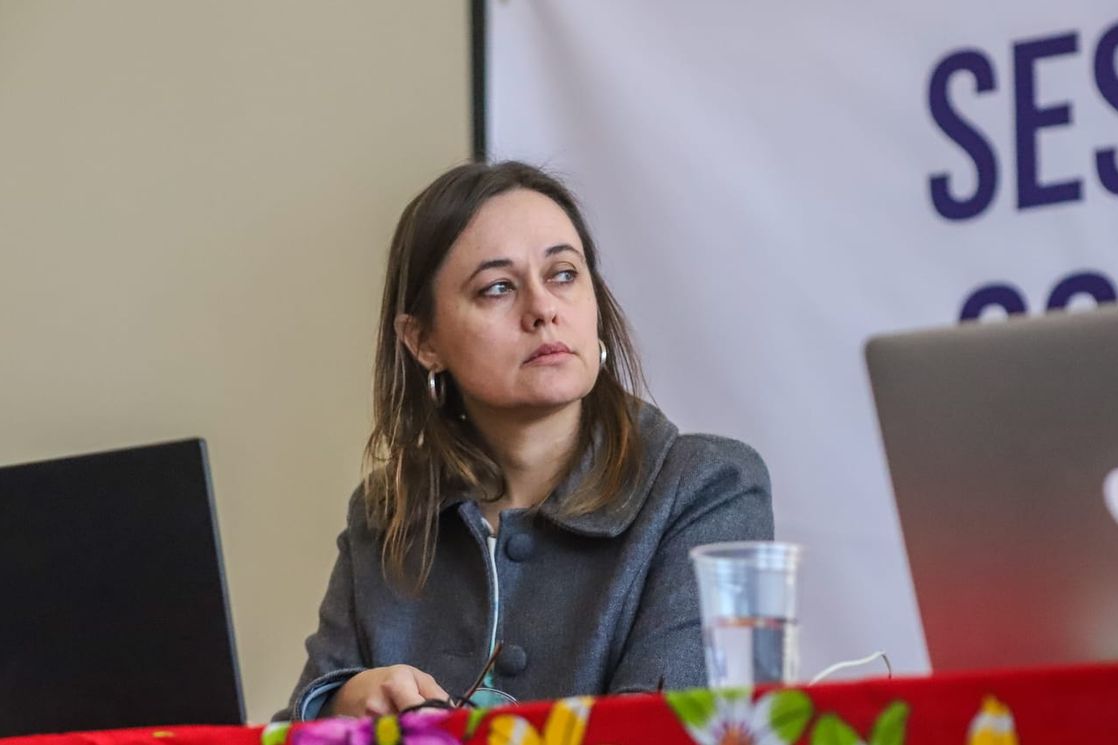


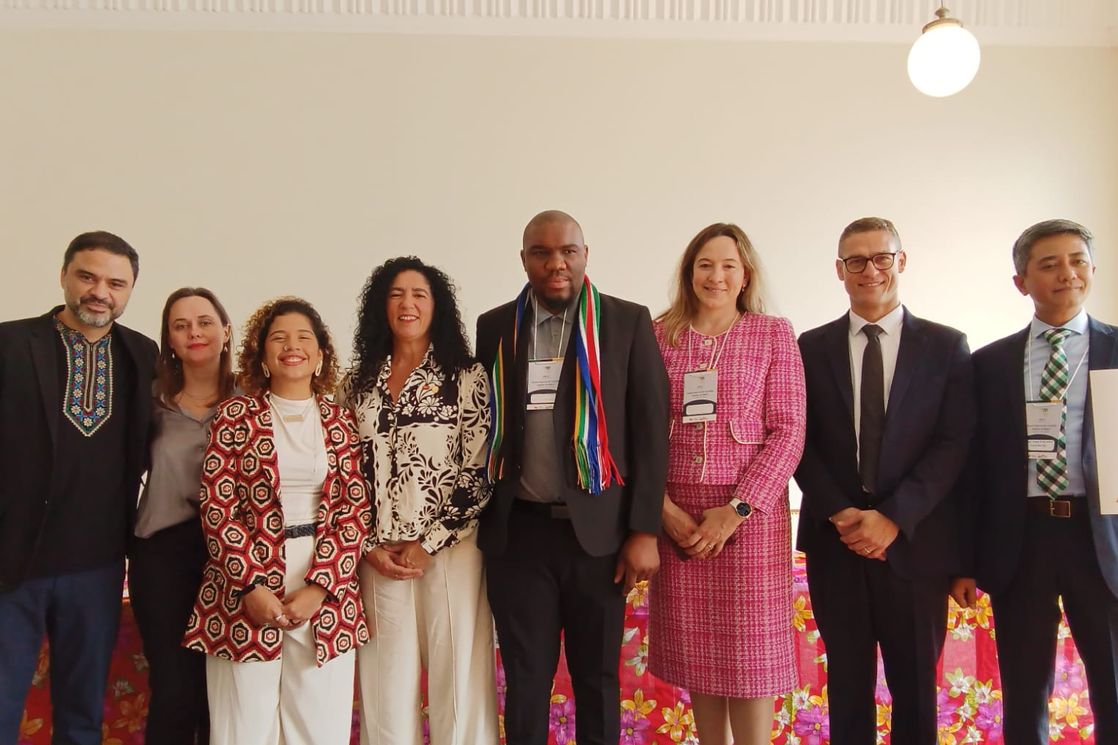
In the run-up to the summit, a special session of the Civil BRICS Council was held in Rio de Janeiro on July 4–5. Representatives of civil society from the member countries reached consensus on a set of recommendations, which were formally presented to the heads of state on July 6 during the summit.
The presentation of these recommendations at the highest level marked the culmination of months of work within the BRICS civil track, which brought together over 120 public organisations from BRICS member and partner countries. Since the beginning of the year, dozens of online consultations had been held to develop a coordinated position. In April and May, HSE University hosted roundtable discussions involving the Russian chapter of the Civil BRICS Council, during which thematic working groups drafted position papers. A key milestone in the preparation process was the first on-site session of the Civil BRICS Council, held on July 4–5 in Rio de Janeiro. The special session brought together delegations of civil society activists, experts, and academic representatives from BRICS countries and their partners.
The final document outlined proposals across seven key areas of the Global South’s agenda. The recommendations focus on enhancing cooperation in the social, economic, technological and cultural spheres, expanding academic exchange, strengthening digital sovereignty, promoting sustainable development, and formalising civil society participation within the BRICS framework. Collectively, they reflect a desire for a fairer and more equitable world order in which the interests of developing nations and the voice of civil society play an increasingly prominent role.

Victoria Panova
‘Civil BRICS is not just a movement. It is not merely a club. It is a family. For the first time, we can say that BRICS represents a qualitatively new form of international alliance. Civil BRICS is an important complement to this, as the process clearly demonstrates how close we are and how much we can accomplish together for the benefit of our peoples,’ noted Victoria Panova. She added that the formalisation of the Civil BRICS Council was made possible through the combined efforts of all member states, with crucial institutional steps taken during Russia’s presidency in 2024.
The establishment of the Civil BRICS Council was enshrined in the Kazan Declaration in July 2024. It became a natural continuation of the BRICS Civil Forums held annually since 2015. Over the past decade, this track of public diplomacy has evolved into a permanent platform for dialogue between civil society organisations and BRICS governments.
For several years, HSE University has been providing expert support for civil society engagement within the BRICS framework. The university actively contributes to shaping Russia’s people-to-people agenda and helps to promote the values of equitable dialogue, sustainable development, and inclusive community involvement in international cooperation processes.
The next on-site meeting of the Civil BRICS Council is scheduled for October 2025 in the city of Salvador, Brazil. It will continue the discussion of implementation mechanisms for the proposed initiatives and explore ways to broaden the participation of Global South countries in the bloc’s agenda.

See also:

HSE University Expands Cooperation with Malaysia in Technology Foresight
HSE University researchers will take part in a study of the future of engineering education in Malaysia, while the Malaysian Industry-Government Group for High Technology (MIGHT) will use the iFORA big-data analysis system to validate the findings of its foresight research. These are the outcomes of a visit by HSE representatives to Kuala Lumpur.
Biologists Discover 'Molecular Fingerprint' of Preeclampsia
Researchers at HSE University employed a new method to model hypoxia in placental cells during pregnancies complicated by preeclampsia and identified molecular markers of tissue hypoxia. Since hypoxia is one of the key mechanisms underlying preeclampsia, these findings are important for a more accurate and timely diagnosis of the disease and for the development of effective treatment methods. The paper has been published in Placenta.
‘Hedgehog’ Versus ‘Relatives’: Researchers Measure How the Brain Responds to Unexpected Words During Natural Speech
Russian neurophysiologists, including researchers from HSE University, have demonstrated the feasibility of using event-related fields (ERFs) to study brain activity during natural speech perception. The researchers showed that this approach can be applied not only to individual words but also to continuous speech. Their findings indicate that words whose meanings differ significantly from the preceding context require longer processing times. The study also reveals that the brain processes function words in two stages: first, it identifies their grammatical role and then uses this information to predict the next word. The study has been published in Frontiers in Human Neuroscience.
Scientists Develop Algorithm for More Reliable Processors in Data Centres
Researchers from HSE MIEM and Samara University have developed the LRF-3D algorithm to automatically bypass idle nodes in three-dimensional networks-on-chip. Thanks to its hierarchical architecture, the algorithm outperforms existing solutions in both speed and path accuracy, improving processor reliability for use in data centres, supercomputers, and AI computing. The source code and test results are publicly available.
Researchers Rank Recommendation Algorithms Using Sports Tournament Model
Researchers from the AI and Digital Science Institute at the HSE Faculty of Computer Science have developed an approach for selecting recommendation algorithms more effectively. Their approach uses pairwise comparisons of algorithms to create a tournament table, with the overall ranking based on their performance across all datasets in the tournament. This can reduce the number of algorithms that need to be tested when developing new services, saving both time and money. The study was presented at the 32nd ACM SIGKDD Conference on Knowledge Discovery and Data Mining (KDD 2026).
Researchers Develop Method for Direct Generation of Regulatory DNA
Researchers at HSE University have developed a model for generating promoters and enhancers—DNA sequences that regulate gene activity. The model works directly with DNA nucleotides, without first transforming them into a continuous numerical representation. This solution could be useful for applications in synthetic biology and gene therapy. The study results were presented at the ICLR 2026 Workshop ‘Generative AI in Genomics (Gen^2): Barriers and Frontiers.’
Researchers at HSE University and Sber Train Neural Networks to Better Predict User Preferences
The HSE FCS AI and Digital Science Institute and Sber have introduced a new architecture for recommendation systems that combines two classes of models, enabling algorithms to better predict users’ interests and needs. A preprint of the paper has been published on arxiv.org and presented at Urban ML.
HSE Graduate School of Business and Alfa-Bank Hold Summer School for Students from China
Twenty-seven students from Chinese universities took part in the international summer school ‘Digital Product Management’ organised by the HSE Graduate School of Business and Alfa-Bank. Over the course of a week, participants explored the Russian economy and business environment, learned about current technology trends, and worked through the key stages of digital product development step by step—from researching user needs and defining a problem to developing a prototype and presenting their final project.
Physicists Discover What Happens Inside a Stable Vortex
Large vortices with characteristic spiral arms are often observed in the atmosphere and the ocean. Physicists from HSE University have explained how these structures form and why they retain their shape. The researchers found that velocities at points located along the same vortex arc remain correlated even over long distances. At the same time, this correlation weakens rapidly with increasing distance from the vortex centre. These differences help explain the formation of spiral arms and may improve models of atmospheric and oceanic currents. The findings have been published in Physical Review Fluids.
HSE University and the Government of Perm Krai Expand the Development of Creative Industries
HSE University and the Government of Perm Krai have signed a strategic partnership agreement. The document, signed by HSE University President Nikita Anisimov and Perm Krai Governor Dmitry Makhonin, defines new areas of collaboration in the creative economy, education, and human resources in Primakamye.