

‘We Will Develop the Sports That Staff and Students Are Fond of’
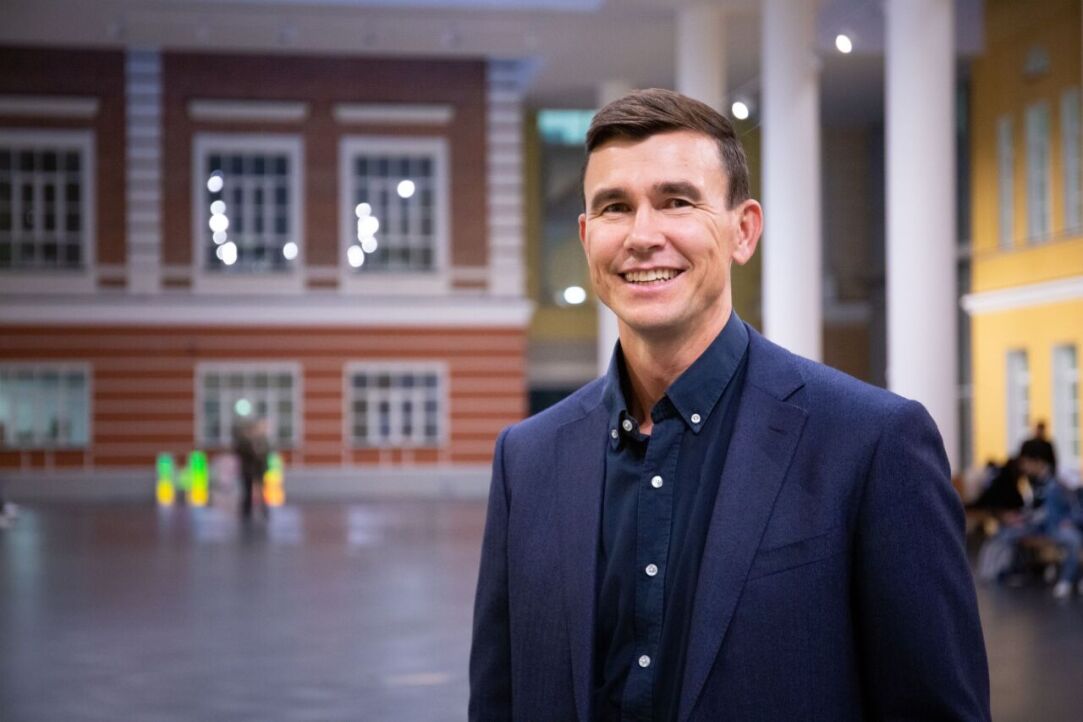
The HSE Corporate Academy has established the Sports Community Support Centre, headed by Olympic rowing champion Sergey Fedorovtsev. He spoke with the HSE News Service about his career, university sports, and the centre’s work.
— How did you become an athlete? Why did you choose rowing?
— I was born in Rostov-on-Don, and I was an active child. I tried out many sports, showing good results and the potential to become a talented athlete, but my professional career started in rowing. First, I wanted to be the best in the group, then the best in city competitions, and then in 1996 I decided that I wanted to become a professional athlete and go to the Olympics.
Academic rowing is a unique sport—the only one in which you move with your back towards the finish line. It can be either an individual or team effort, and rowers use all muscle groups. Competitions are held on the water and outdoors, and the locations are constantly changing.
— How did your sports career develop?
— I became a champion in young men’s competitions, and then the adult champion of Russia. In the spring of 2000, together with senior athletes, we assembled a great team to go to a qualification regatta, and then to the Olympic Games. But I fell ill unexpectedly and was diagnosed with a complicated condition. The doctor advised me to change my sport, but I decided not to. This was followed by the most difficult period of physical training in my life, including an unbearable workload and endless workouts. In 2001 I won silver in the Russian championship and returned to the national team. In 2003 I qualified at the World Championships, then in 2004 I won the Olympic Games in Athens. I was the youngest in the team, and I was assigned the leading role in the rowing crew.
Our victory in the Olympics came as a surprise to many people, but we prepared very intensely both physically and psychologically. Although there were other victories after the Olympics, that one remained the most important for me.
— You came to work at HSE University in 2022 at the Department of Physical Training. How did that happen?
— Quite by accident. An HSE student called me and said he would like to train with me. I didn't know this student, but he somehow managed to persuade me to join the training. There were two teams there, a men's and a women's team. Now we train all year round, both on the water and on rowing machines in winter, and the teams show good results.
— How did you come up with the idea of creating the Sports Community Support Centre?
— During a Sunday jog with HSE Rector Nikita Anisimov, we discussed possible trajectories for developing sports at the university.
There are a lot of fans of various sports among the students and staff of HSE University. There is a Running Club—a community of running enthusiasts headed by Anna Kozyreva, Head of the Promotions and Communications Unit of the Faculty of Computer Science. I am very glad that she agreed to work part-time at our centre.
— Who else among your colleagues is actively involved in sports?
— It’s well known that HSE University Rector Nikita Anisimov is fond of sports: he constantly participates in runs, setting an example for others. Vice Rector Shamil Akhmetov is fond of football, Dmitry Zemtsov does fencing, and Alexey Koshel plays chess (we once played a couple of games, and I lost both). I hope that other colleagues will find an opportunity to join university communities in their sports.
The HSE Department of Physical Training headed by Oleg Bulykin, a great leader and former successful athlete, has also contributed to the development of sports communities at HSE University.
— Does the Sports Community Support Centre have a plan for the next five years? How many employees and students do you aim to involve in sports?
— Two years ago, at the Russia–Country of Sports international forum, President Vladimir Putin said that 70% of Russian citizens should be regularly involved in sports by 2030. I think our university can also focus on this indicator. We will develop the sports that staff and students are fond of.
The Sports Community Support Centre aims to create a favourable environment for the development of sports and physical education and strengthen ties between various teams. Sports and active recreation are a good way to overcome stress, achieve psychological and emotional relief, and maintain and strengthen health—and everyone has the opportunity to try it.
Today, for many people, HSE has become a university that not only provides high-quality education, but also pays great attention to sports. We will strengthen and develop this image.
See also:

Scientists Discover That the Brain Responds to Others’ Actions as if They Were Its Own
When we watch someone move their finger, our brain doesn’t remain passive. Research conducted by scientists from HSE University and Lausanne University Hospital shows that observing movement activates the motor cortex as if we were performing the action ourselves—while simultaneously ‘silencing’ unnecessary muscles. The findings were published in Scientific Reports.
HSE Scientists Reveal What Drives Public Trust in Science
Researchers at HSE ISSEK have analysed the level of trust in scientific knowledge in Russian society and the factors shaping attitudes and perceptions. It was found that trust in science depends more on everyday experience, social expectations, and the perceived promises of science than on objective knowledge. The article has been published in Universe of Russia.
IDLab: Fascinating Research, Tough Deadlines, and Academic Drive
The International Laboratory of Intangible-driven Economy (IDLab) was established at the HSE campus in Perm 11 years ago. Its expertise in data processing and analysis allows researchers to combine fundamental studies with applied projects, including the development of risk and cybersecurity models for Sber. The head of the laboratory, Professor Petr Parshakov, and Senior Research Fellow Professor Mariya Molodchik spoke to the HSE News Service about IDLab’s work.
HSE Lecturers Awarded Yandex ML Prize 2025
The Yandex ML Prize is awarded to lecturers and heads of educational programmes who contribute to the development of artificial intelligence in Russia. This year, 10 laureates were selected from 300 applicants, including three members of the HSE Faculty of Computer Science (FCS). A special Hall of Fame award was also presented for contributions to the establishment of machine learning as an academic field. One of the recipients was Dmitry Vetrov, Research Professor at the HSE FCS.
HSE Tops Ranking of Universities Participating in Priority 2030 Programme
The Russian Ministry of Science and Higher Education has published an updated list of participants in the Priority 2030 programme. A total of 106 universities will receive support this year. HSE University was included in the first group and topped the ranking.
HSE University and Banking and Finance Academy of Uzbekistan Sign Memorandum on Scientific Cooperation
The partnership aims to foster academic collaboration in the fields of global economics, sustainable development, and Islamic finance. Strengthening academic ties with Uzbekistan represents a promising direction for scientific exchanges and the implementation of international projects in sustainable development.
HSE Psycholinguists Launch Digital Tool to Spot Dyslexia in Children
Specialists from HSE University's Centre for Language and Brain have introduced LexiMetr, a new digital tool for diagnosing dyslexia in primary school students. This is the first standardised application in Russia that enables fast and reliable assessment of children’s reading skills to identify dyslexia or the risk of developing it. The application is available on the RuStore platform and runs on Android tablets.
HSE Scientists Optimise Training of Generative Flow Networks
Researchers at the HSE Faculty of Computer Science have optimised the training method for generative flow neural networks to handle unstructured tasks, which could make the search for new drugs more efficient. The results of their work were presented at ICLR 2025, one of the world’s leading conferences on machine learning. The paper is available at Arxiv.org.
Neural Network Trained to Predict Crises in Russian Stock Market
Economists from HSE University have developed a neural network model that can predict the onset of a short-term stock market crisis with over 83% accuracy, one day in advance. The model performs well even on complex, imbalanced data and incorporates not only economic indicators but also investor sentiment. The paper by Tamara Teplova, Maksim Fayzulin, and Aleksei Kurkin from the Centre for Financial Research and Data Analytics at the HSE Faculty of Economic Sciences has been published in Socio-Economic Planning Sciences.
‘To Help Make the World More Sustainable, Fair, and Humane’
The BRICS International School: New Generation has concluded at HSE University, bringing together more than 100 participants from 38 BRICS and Global South countries. The attendees included early-career researchers, diplomats, entrepreneurs, journalists, and civil society representatives.