

Centre for Language and Brain Begins Cooperation with Academy of Sciences of Sakha Republic
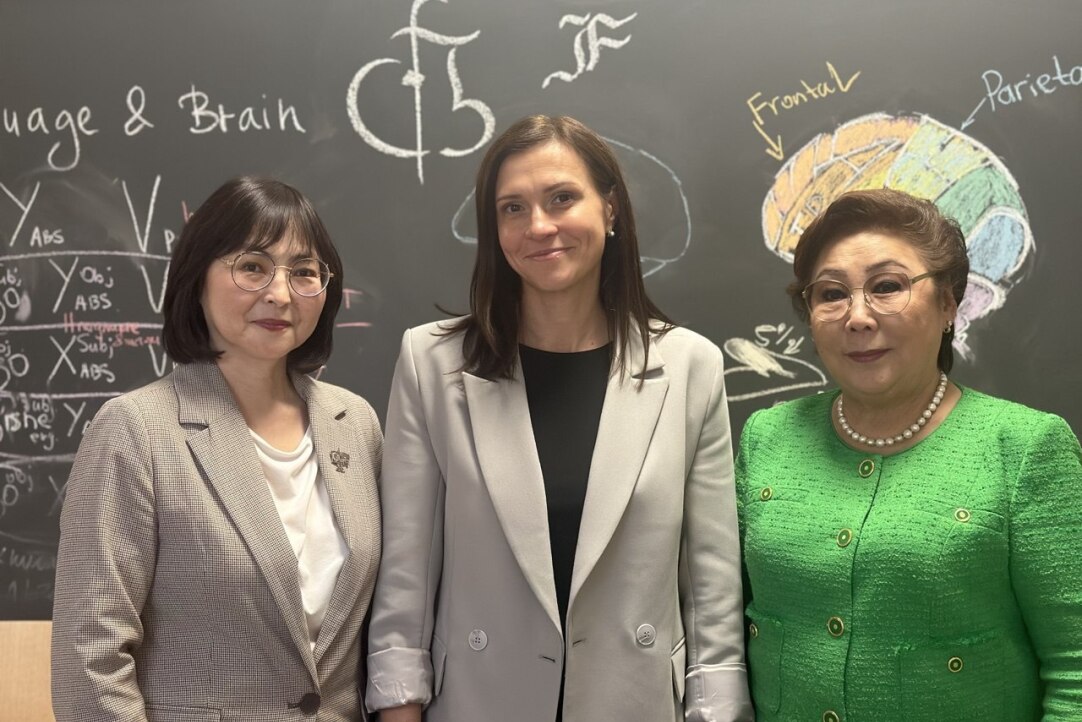
HSE University's Centre for Language and Brain and the Academy of Sciences of the Republic of Sakha (Yakutia) have signed a partnership agreement, opening up new opportunities for research on the region's understudied languages and bilingualism. Thanks to modern methods, such as eye tracking and neuroimaging, scientists will be able to answer questions about how bilingualism works at the brain level.
For several years, researchers at the Centre have been studying how language is processed by speakers of different languages, including Russian, Tatar, Uzbek, as well as Adyghe and other less-studied languages of Russia and the near abroad. The agreement with the Academy of Sciences of the Sakha Republic provides for conducting joint research in this area, sharing knowledge, and launching new research projects related to the study of the region's languages.
Yakutia is a unique region with two state languages, Russian and Yakut, as well as a number of official languages of the indigenous minorities of the North, including Evenki, Even, Yukagir, Dolgan, and Chukchi. According to the 2020 All-Russia Census, the Yakut language is spoken by more than 479,000 people.
One of the areas of joint research between the Centre for Language and Brain and the Academy of Sciences of the Republic of Sakha is how children and adults learn and use different languages, what factors influence language choice in different communicative situations, and how bilingualism changes the structure and functions of the brain.
Together with specialists from Yakutia, neurolinguists from the Centre for Language and Brain are planning to study how language develops in children in monolingual and bilingual environments, as well as in children with speech and language disorders. This will help to understand the mechanisms behind language development and create more effective methods for assessing and correcting language skills.
Nadezhda Vasilyeva, Leading Researcher at the Centre for the Study, Preservation and Development of Native Languages of the Academy of Sciences of the Republic of Sakha, notes, ‘The agreement expands promising research areas, as modern neuroimaging methods will allow us to conduct more fundamental research on the mechanisms of bilingualism formation. Our cooperation will not only strengthen the scientific potential of both sides, but also become the basis for working out methods and technologies for the development of mother tongues and balanced bilingualism. We have planned a joint research expedition this year and are confident that the partnership will be successful and show excellent results.’
Scientists will also analyse how bilinguals read and perceive text in their native language, such as Yakut, and in Russian, and identify the specifics of the cognitive mechanisms involved in reading and comprehension. Such research is important for the development of educational programmes that take into account the specificities of bilingual learning.
Furthermore, digital tools in the Yakut language for the assessment of language and cognitive functions will be developed.
Olga Dragoi, Director of the Language and Brain Centre, notes, ‘The agreement opens up new opportunities for studying language processes in the unique cultural context of Yakutia. We are confident that our joint efforts will allow us not only to advance research, but also to make a significant contribution to the preservation and development of the region's less-studied languages.’
This project will be an important step in the study of linguistic diversity and the promotion of bilingualism in Russia.

See also:

HSE Researchers Create New Corpus of Early Child Speech in Russian
Researchers at the HSE Centre for Language and Brain have presented RusLan-M, an open multimedia corpus that makes it possible to trace the development of early child speech in Russian from first words to the emergence of complex grammatical constructions. The database contains around 41 hours of video recordings and more than 35,000 child utterances. The new resource will help researchers study more precisely how children acquire Russian and, in the longer term, develop more reliable tools for assessing speech development. The study has been published in Language Resources and Evaluation.
Scientists Develop Algorithm for More Reliable Processors in Data Centres
Researchers from HSE MIEM and Samara University have developed the LRF-3D algorithm to automatically bypass idle nodes in three-dimensional networks-on-chip. Thanks to its hierarchical architecture, the algorithm outperforms existing solutions in both speed and path accuracy, improving processor reliability for use in data centres, supercomputers, and AI computing. The source code and test results are publicly available.
Researchers Rank Recommendation Algorithms Using Sports Tournament Model
Researchers from the AI and Digital Science Institute at the HSE Faculty of Computer Science have developed an approach for selecting recommendation algorithms more effectively. Their approach uses pairwise comparisons of algorithms to create a tournament table, with the overall ranking based on their performance across all datasets in the tournament. This can reduce the number of algorithms that need to be tested when developing new services, saving both time and money. The study was presented at the 32nd ACM SIGKDD Conference on Knowledge Discovery and Data Mining (KDD 2026).
Researchers Develop Method for Direct Generation of Regulatory DNA
Researchers at HSE University have developed a model for generating promoters and enhancers—DNA sequences that regulate gene activity. The model works directly with DNA nucleotides, without first transforming them into a continuous numerical representation. This solution could be useful for applications in synthetic biology and gene therapy. The study results were presented at the ICLR 2026 Workshop ‘Generative AI in Genomics (Gen^2): Barriers and Frontiers.’
Researchers at HSE University and Sber Train Neural Networks to Better Predict User Preferences
The HSE FCS AI and Digital Science Institute and Sber have introduced a new architecture for recommendation systems that combines two classes of models, enabling algorithms to better predict users’ interests and needs. A preprint of the paper has been published on arxiv.org and presented at Urban ML.
Physicists Discover What Happens Inside a Stable Vortex
Large vortices with characteristic spiral arms are often observed in the atmosphere and the ocean. Physicists from HSE University have explained how these structures form and why they retain their shape. The researchers found that velocities at points located along the same vortex arc remain correlated even over long distances. At the same time, this correlation weakens rapidly with increasing distance from the vortex centre. These differences help explain the formation of spiral arms and may improve models of atmospheric and oceanic currents. The findings have been published in Physical Review Fluids.
‘The Peak of Stupidity’ and ‘The Valley of Despair’: HSE Economists Propose an Explanation for the Dunning–Kruger Effect
The Dunning–Kruger effect, which describes a sharp surge in self-confidence among beginners followed by an equally rapid decline as they gain experience, can be explained by the nature of the learning process and the acquisition of new knowledge. This conclusion was reached by Andrey Vorchik of the HSE Faculty of Economic Sciences together with independent researcher Murat Mamyshev. They developed a mathematical model of learning and demonstrated how subjective confidence is formed and changes as knowledge accumulates, as well as how teachers can reduce the ‘valley of despair’ experienced by learners.
Toffee and Risk: Scientists Discover Why People Who Crave Sweets Make More Impulsive Choices
Having a sweet tooth may be linked not only to eating habits but also to the way people make decisions. Researchers at HSE University have found that people with a preference for sweet foods tend to behave more impulsively—not because they want immediate rewards, but because they are less willing to tolerate uncertainty. These findings may help improve treatments for addiction. The study findings have been published in Frontiers in Psychology.
Physicists Find a Way to Model Ion Parameters in Plasma in Seconds
Researchers from HSE University and the Moscow Institute of Physics and Technology (MIPT) have developed a set of simple analytical methods for calculating the properties of heavy ions in helium under the influence of a strong electric field. The new approach speeds up calculations of ion mobility and ion–molecule reaction rates by thousands of times while maintaining sufficient accuracy for plasma jet modelling. The findings have been published in the journal Physica Scripta.
Two Years of Growth or Decline: How to Choose an Investment Strategy
Economists from HSE University, together with colleagues from international universities, have analysed stock market movements over almost a century and proposed an investment strategy that could have delivered returns nearly twice as high as the market average. Their research suggests following a momentum strategy during periods of sustained market growth and switching to a value strategy after prolonged market declines. The study has been published in the Journal of Banking and Finance.